Is The AI Bubble Popping?

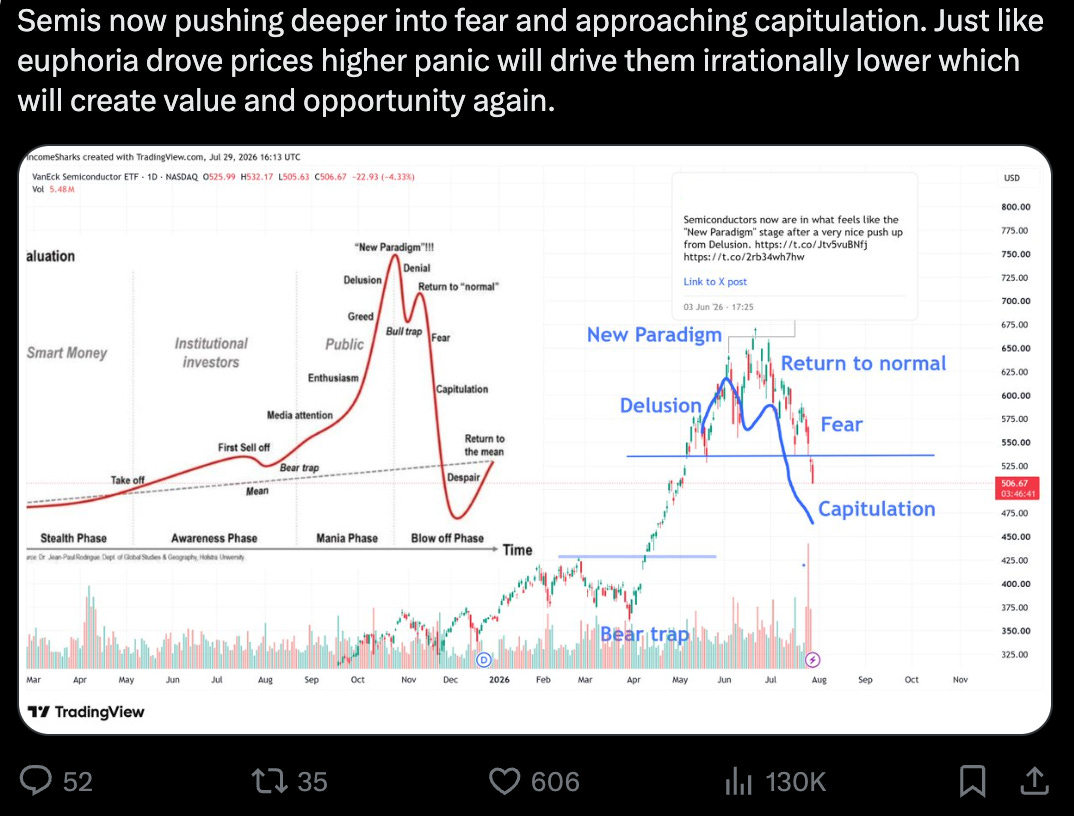
We’ve been seeing this tweet make rounds on Twitter lately.
It basically compares the price action of Semiconductors to the typical cycle of an asset bubble.
And the tweet suggests that we’re not entering the “Capitulation” phase, which would mean a free fall in the Semiconductors name.
So, is that what’s really coming next for the sector that makes up almost 20% of the S&P 500?
If yes, then it’s time to run for the hills, but if no, then this could prove to be a major buying opportunity.
Let’s figure out…
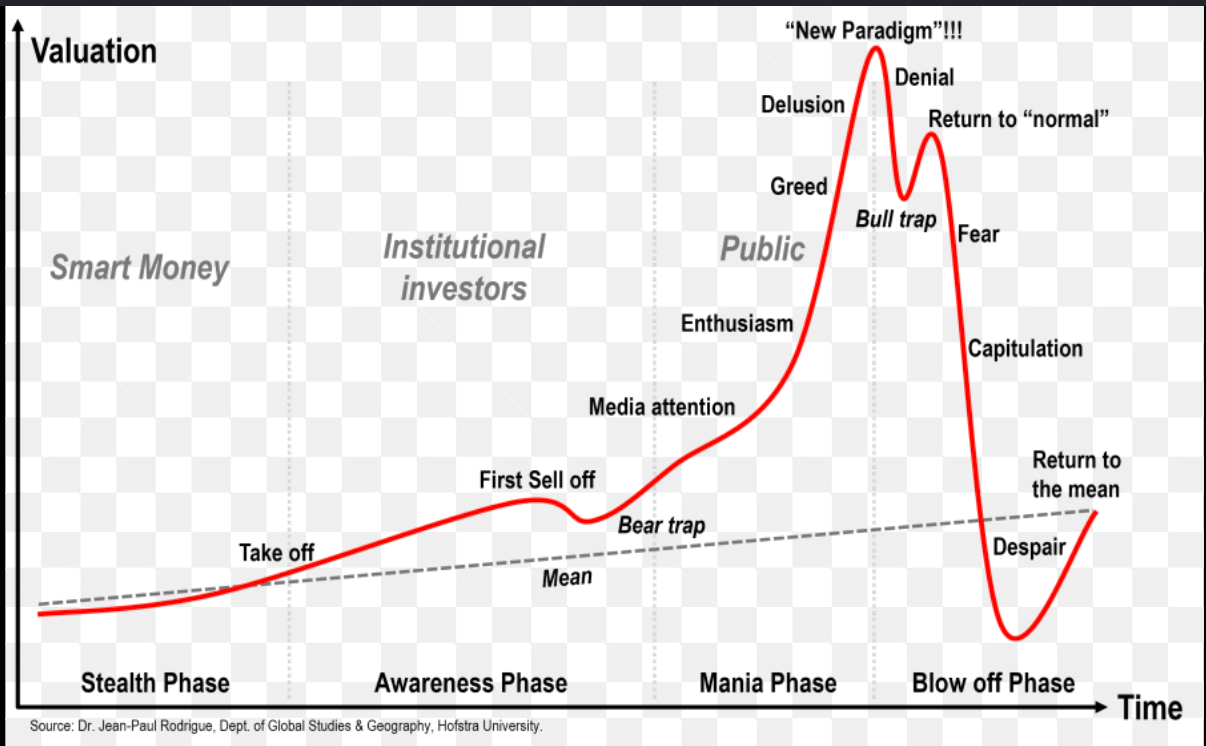
First, we got to understand how the asset bubble cycle exactly works.
Stealth Phase: A fresh technological breakthrough draws initial market notice and early investors/Smart Money start to strategically position.
Awareness Phase: Real wealth grows as funding speeds up and institutional investors rush in to position themselves.
Mania Phase: Retail hype takes over and capital flows at an enormous phase, which keeps getting increasingly more extreme.
Blow off Phase: Profits fall short of costs, spending drops, and the cycle turns downward unwinding all of the excess that was built up during the Mania.
Now the tweet earlier is suggesting that we’re in the Blow off Phase already and within that we’re entering the most painful part of it i.e., the “Capitulation”.
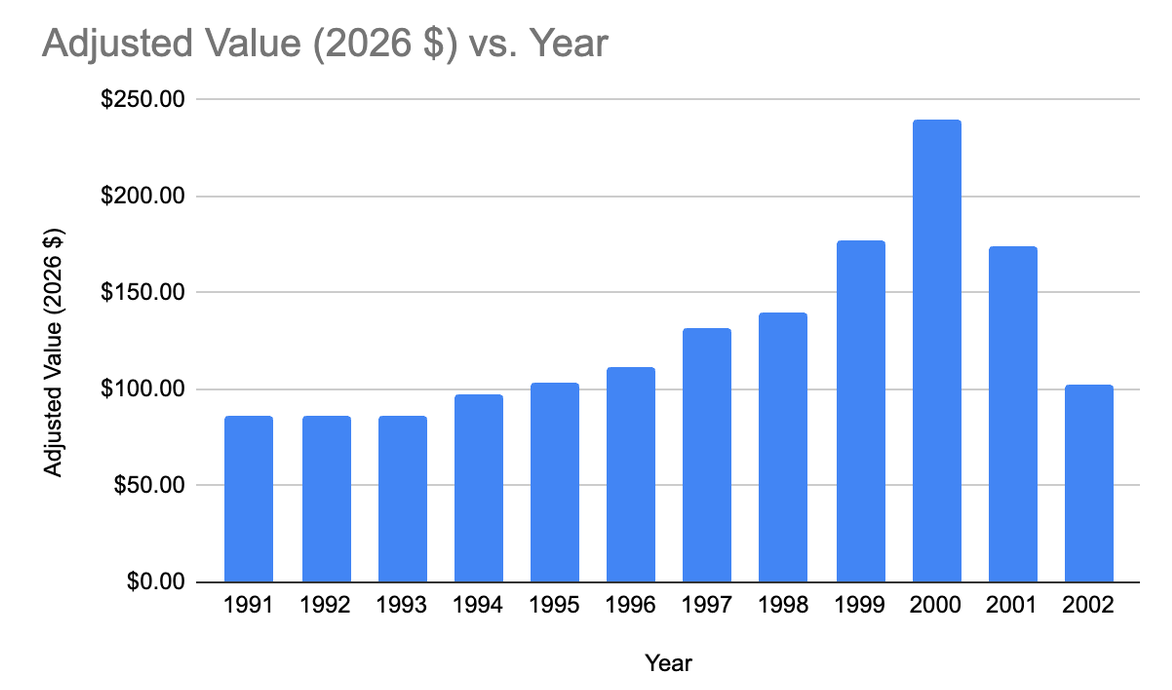
This type of bubble behavior is something we clearly saw back in 1990s and early 2000s in what’s called the “Dot Com Bubble.”
Stealth Phase: In the early 1990s, the birth of the World Wide Web created a massive technical disruption that laid the groundwork for future growth.
Awareness Phase: Institutional capital quickly rushed in, driving a $500 billion infrastructure buildout by telecom giants like WorldCom and Global Crossing to wire the nation. Early on, this created genuine economic prosperity and explosive profits for hardware suppliers like Cisco, propelling the broader stock market up nearly 200%.
Mania Phase: By the end of the decade, retail frenzy pushed deployment into hyperdrive. Companies blindly laid fiber lines until the network capacity exceeded actual public demand by a staggering 100-to-1 ratio.
Blow-off Phase: In 2000 and 2001, the unsustainable funding dried up completely. The broader economic expansion stalled instantly, triggering a massive market crash that wiped out trillions of dollars in investor wealth.
So are we about to see another one of these wipeouts in the second half of 2026?
Well there is a key difference between the Dot Com bubble and today that we also need to account for in order to answer this… let’s look at that next.
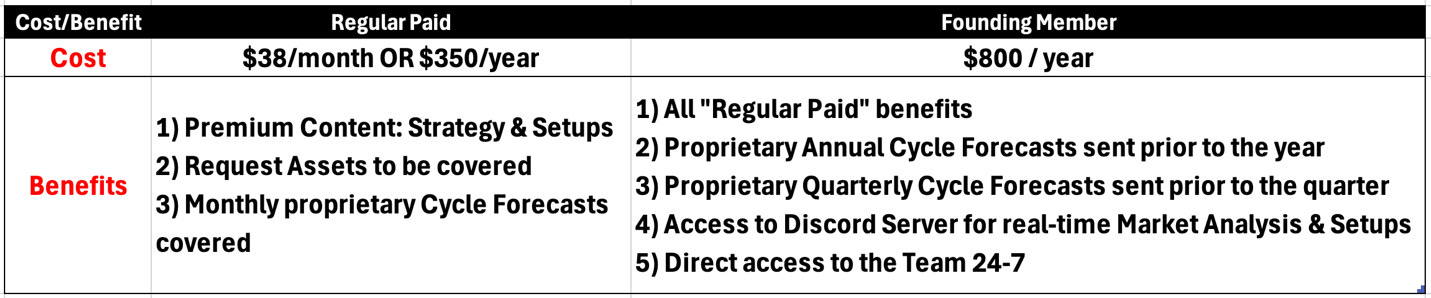
Find our membership cost/benefits below.
If you’re serious about Making Money (our primary goal at Cycles Edge), then the Premium Sections are key for you!