

Should You Buy The Dip?

On The Market’s Mind
U.S. equities posted their second consecutive week of losses, driven primarily by a heavy sell-off in big tech names as the first batch of Q2 earnings sparked investor anxiety over massive AI capital expenditures. While cooling inflation data and a resilient labor market provided underlying macro support, surging oil prices and geopolitical tensions in the Middle East added to market volatility.
Here are the current key drivers:
1. AI Capex Anxiety vs. ROI Realities
The kickoff of big tech earnings turned risk-off as investors scrutinized corporate spending:
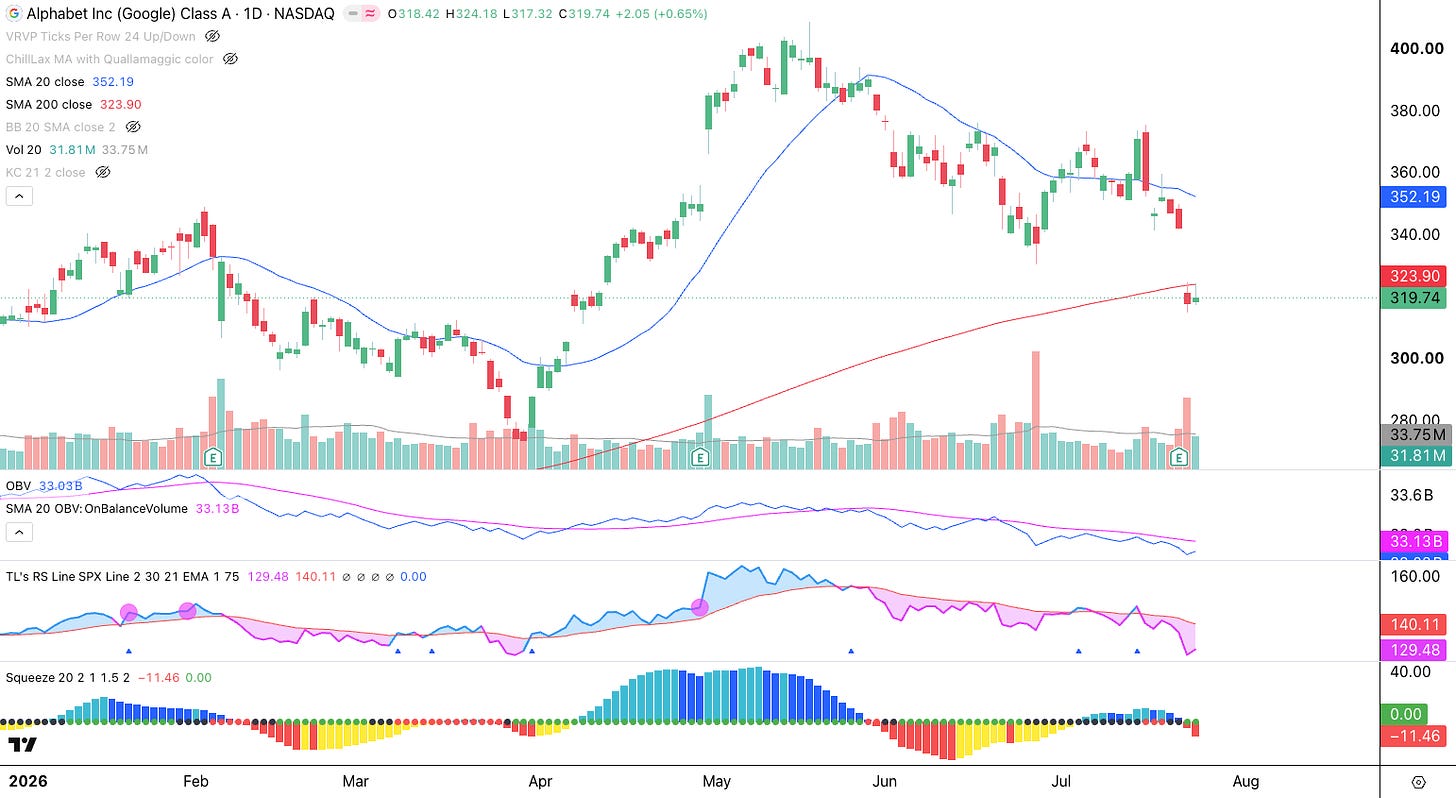
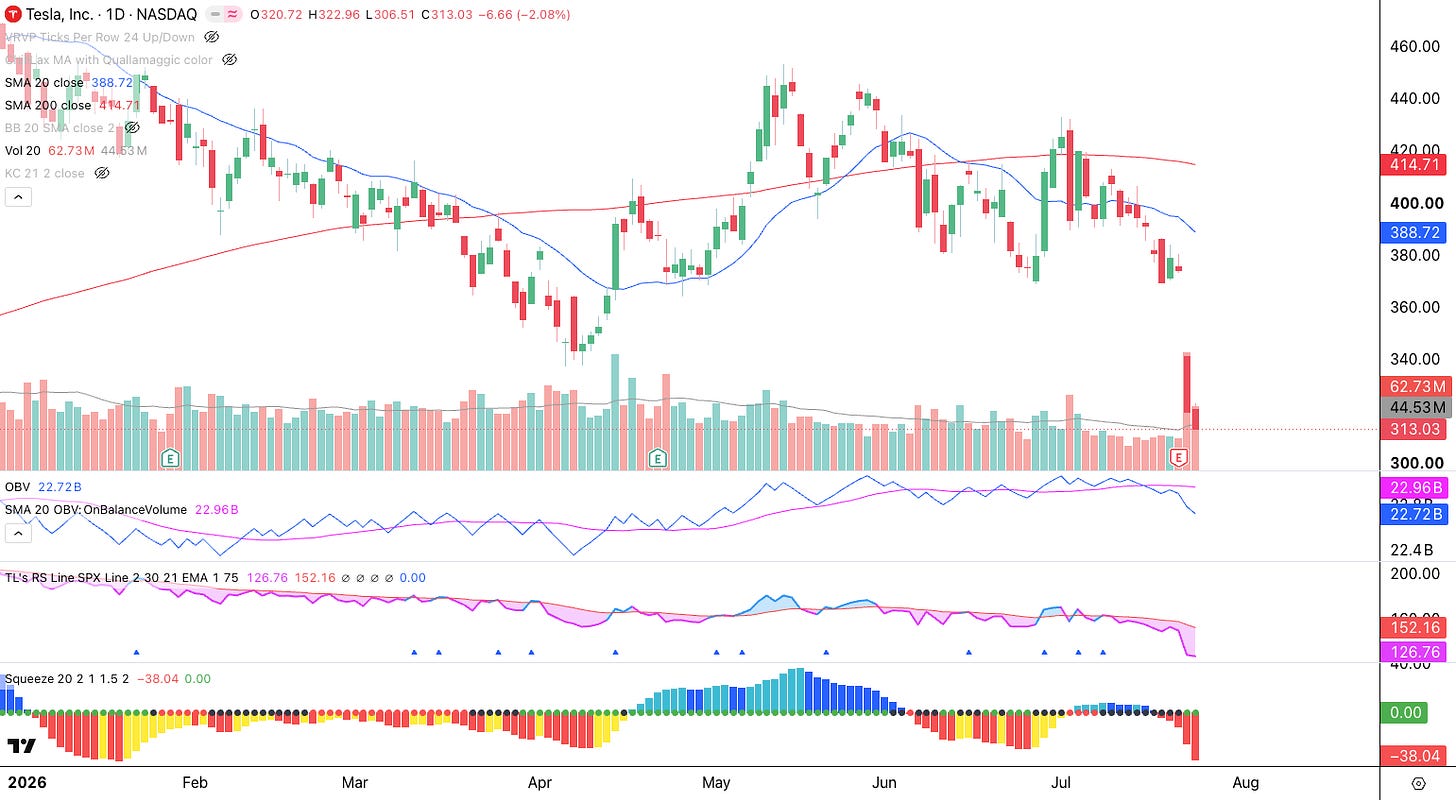
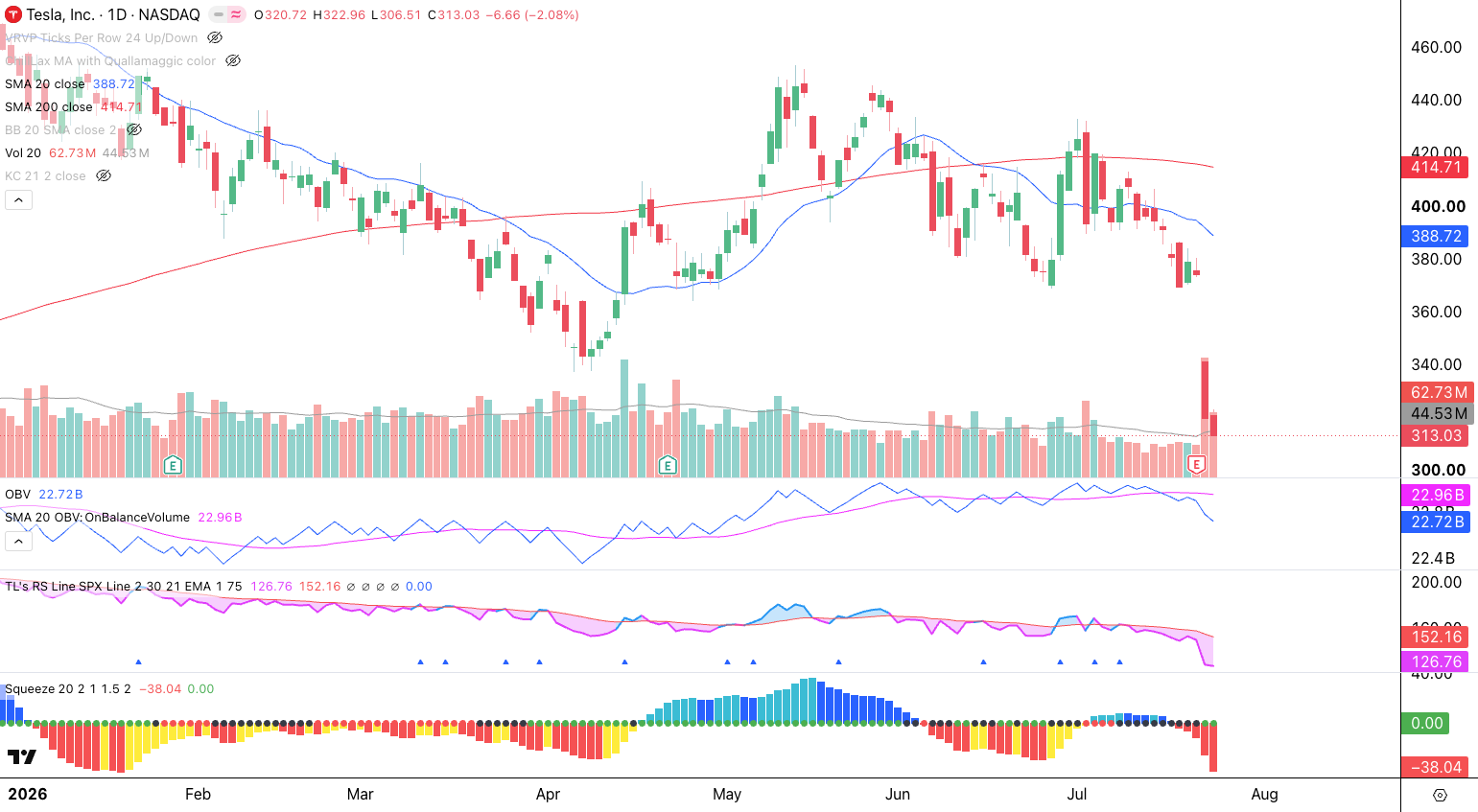
Alphabet (GOOGL) and Tesla (TSLA) sparked Thursday’s tech slide. Alphabet raised its AI infrastructure spending targets toward $200B, while Tesla reported its first quarterly cash burn in two years alongside forecast outlays, sending TSLA down over 14% and GOOGL down 7%. Below are the daily charts of GOOGL and TSLA showing that both are now in downtrends below the 20 Simple Moving Average (SMA) and 200 SMA.
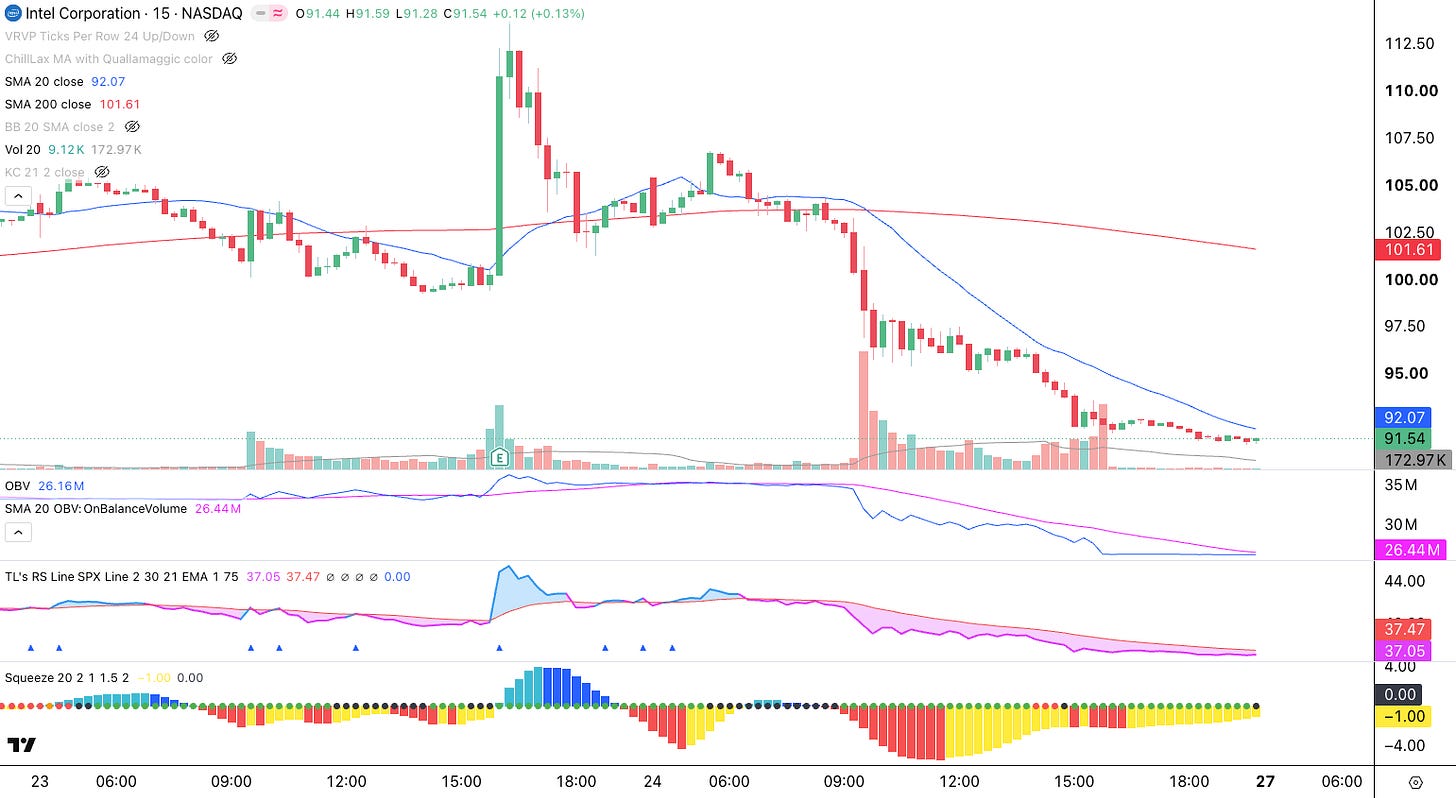
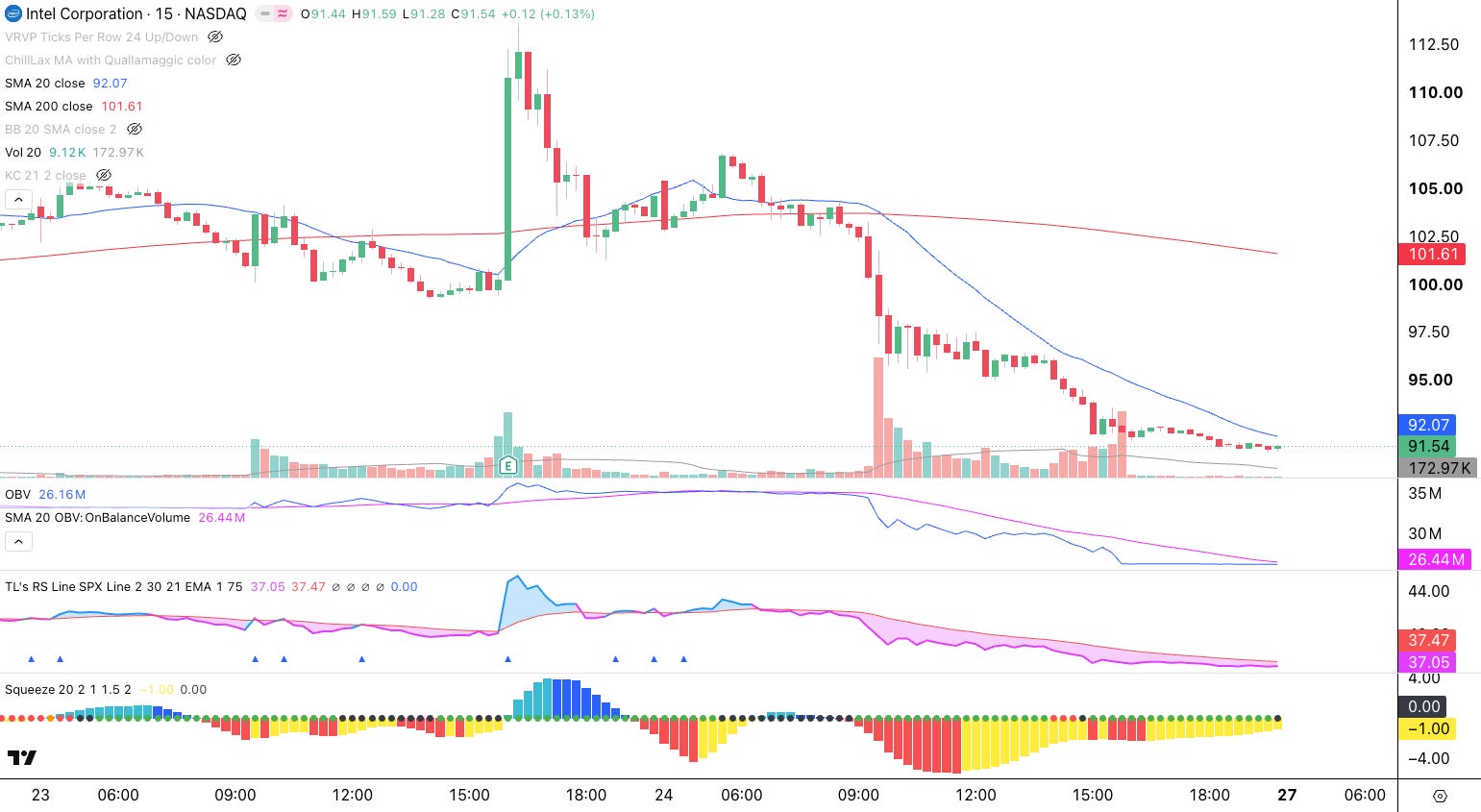
Intel (INTC) jumped almost 14% after hours after topping revenue and EPS expectations, buoyed by a 59% year-over-year surge in data center CPU demand. However it gave back that entire gain and ended the closed the next day (Friday) down almost 8%. This is a perfect example of how unforgiving this earnings season is. Here is the 15 minute chart showing the nasty whipsaw price action after earnings in the extended hours session.
2. Energy & Geopolitics
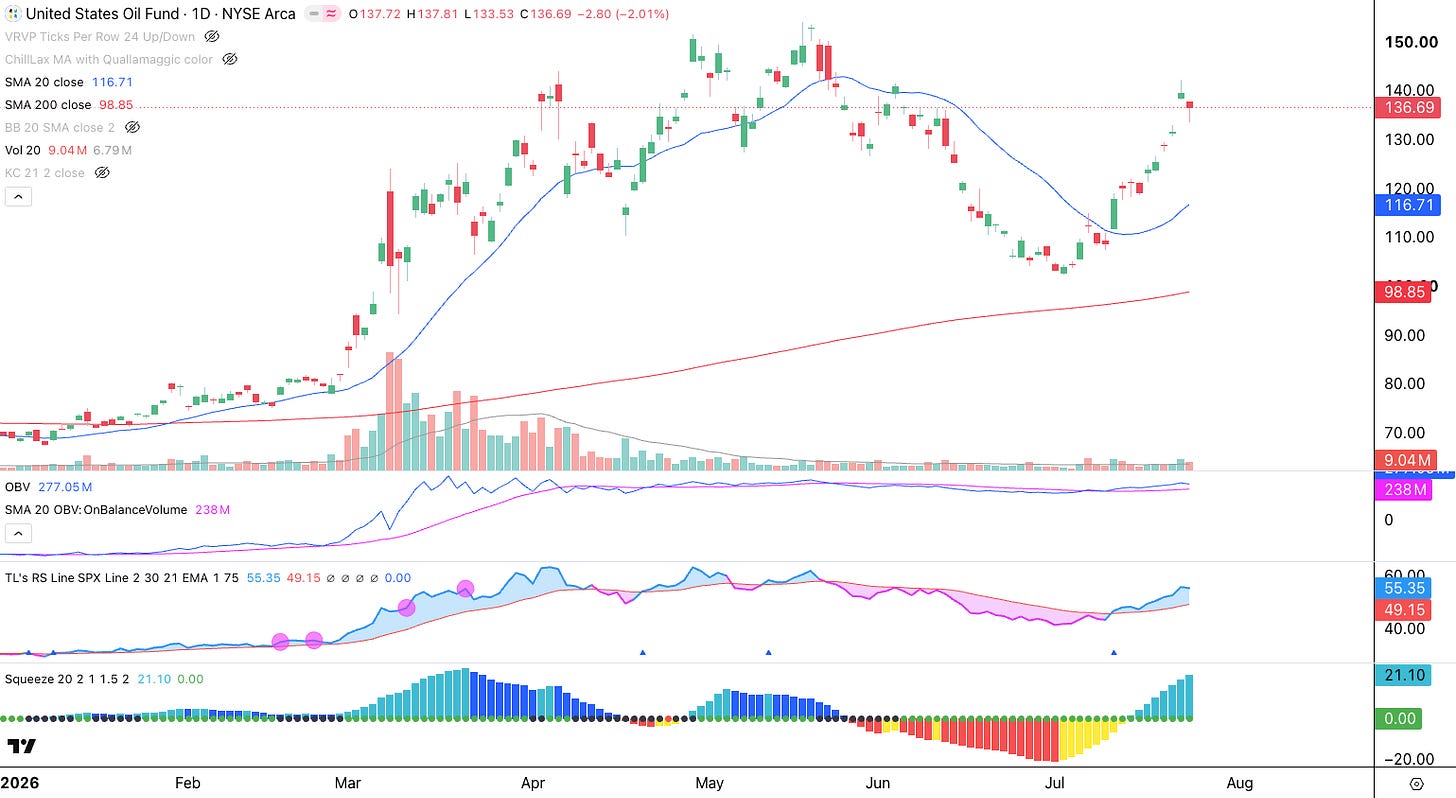
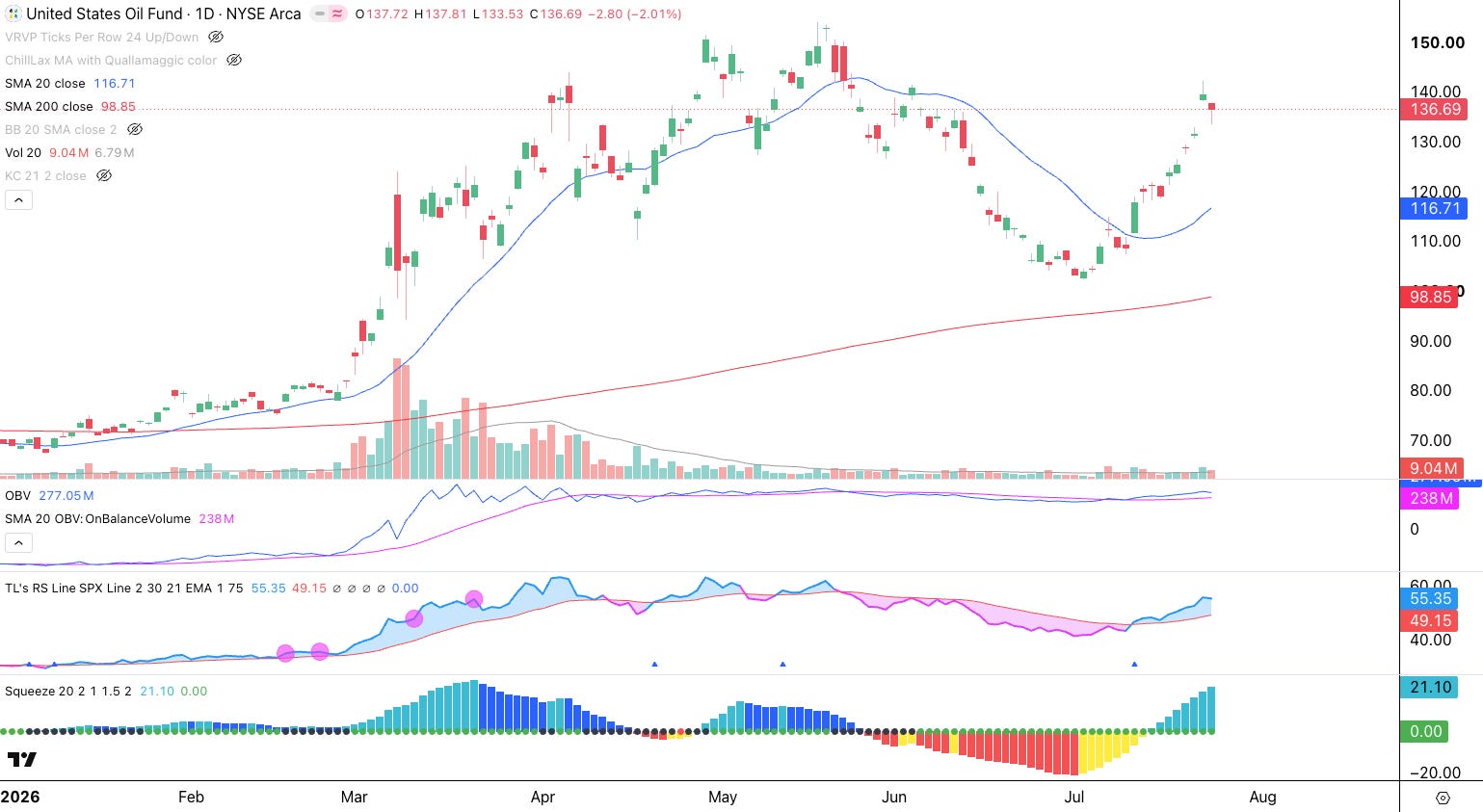
Crude Oil Volatility: WTI crude oil gained over 10% last week due to escalating tensions in the Middle East. Rising energy prices have kept inflation expectations sticky.
3. Macro & Economic Indicators
Labor Resilience: Weekly initial jobless claims dropped to 187,000 (below the 212,000 consensus estimate), demonstrating continued labor market strength.
Rates & Inflation: The 10-year Treasury yield hovered around 4.68%, up 2.99% last week. Recent cooler inflation prints (June CPI falling 0.4% MoM) have given the Federal Reserve room to hold interest rates steady, though energy price spikes remain a key risk factor.
Next week Microsoft, Meta and Amazon report, which should be the key group of catalysts. Markets will look for clearer evidence of AI revenue monetization to justify ongoing capital spending. Unadulterated AI capex spending could trigger heavy selling.
Should You Buy The Dip?
With the Nasdaq 100 (QQQ) down almost 9% from recent highs, is it time to buy the dip?
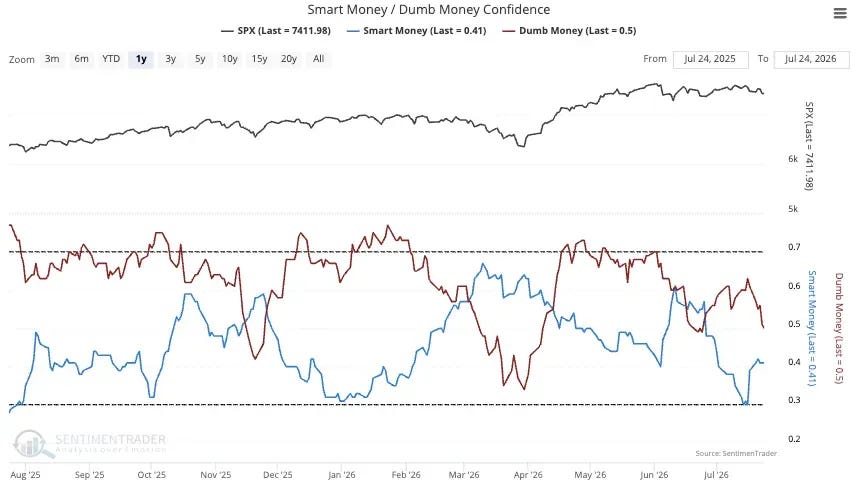
The Smart Money/Dumb Money Confidence indicator shows that Smart Money is noticeably buying the dip, as Dumb Money is heading for the exits. Should you follow on?
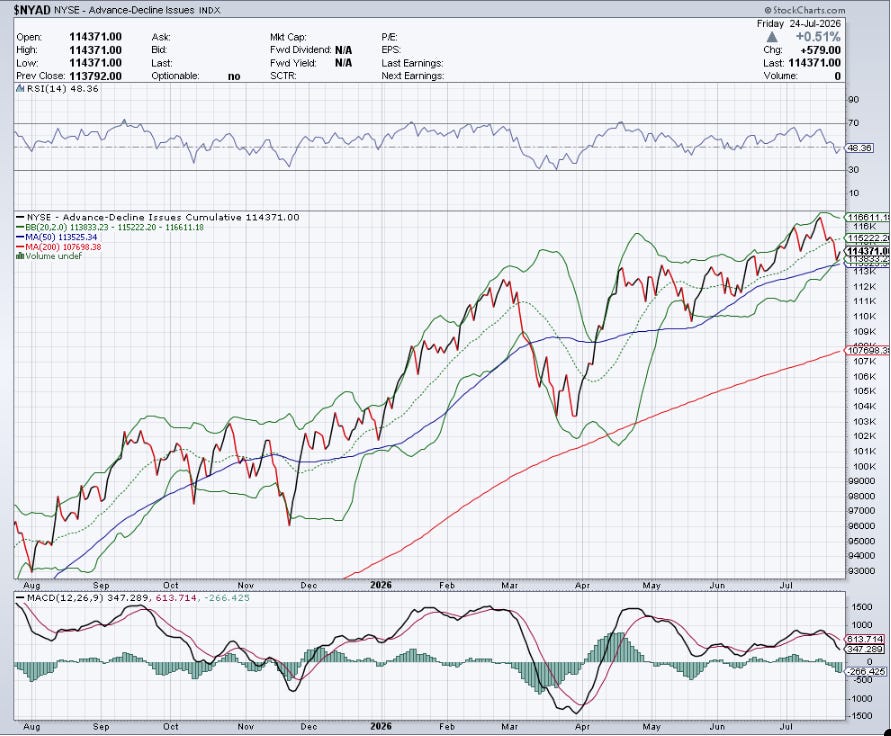
On top of that, the NYSE Advance/Decline Line is ticking up at strong support from the 50 Simple Moving Average (SMA) and Lower Bollinger Band). Breadth could continue higher from here if dip buyers come in.
Here’s the answer…
Disclaimer — All materials, information, and ideas from Cycles Edge are for educational purposes only and should not be considered Financial Advice. This blog may document actions done by the owners/writers of this blog, thus it should be assumed that positions are likely taken. If this is an issue, please discontinue reading. Cycles Edge takes no responsibility for possible losses, as markets can be volatile and unpredictable, leading to constantly changing opinions or forecasts.